Technologies supporting film production
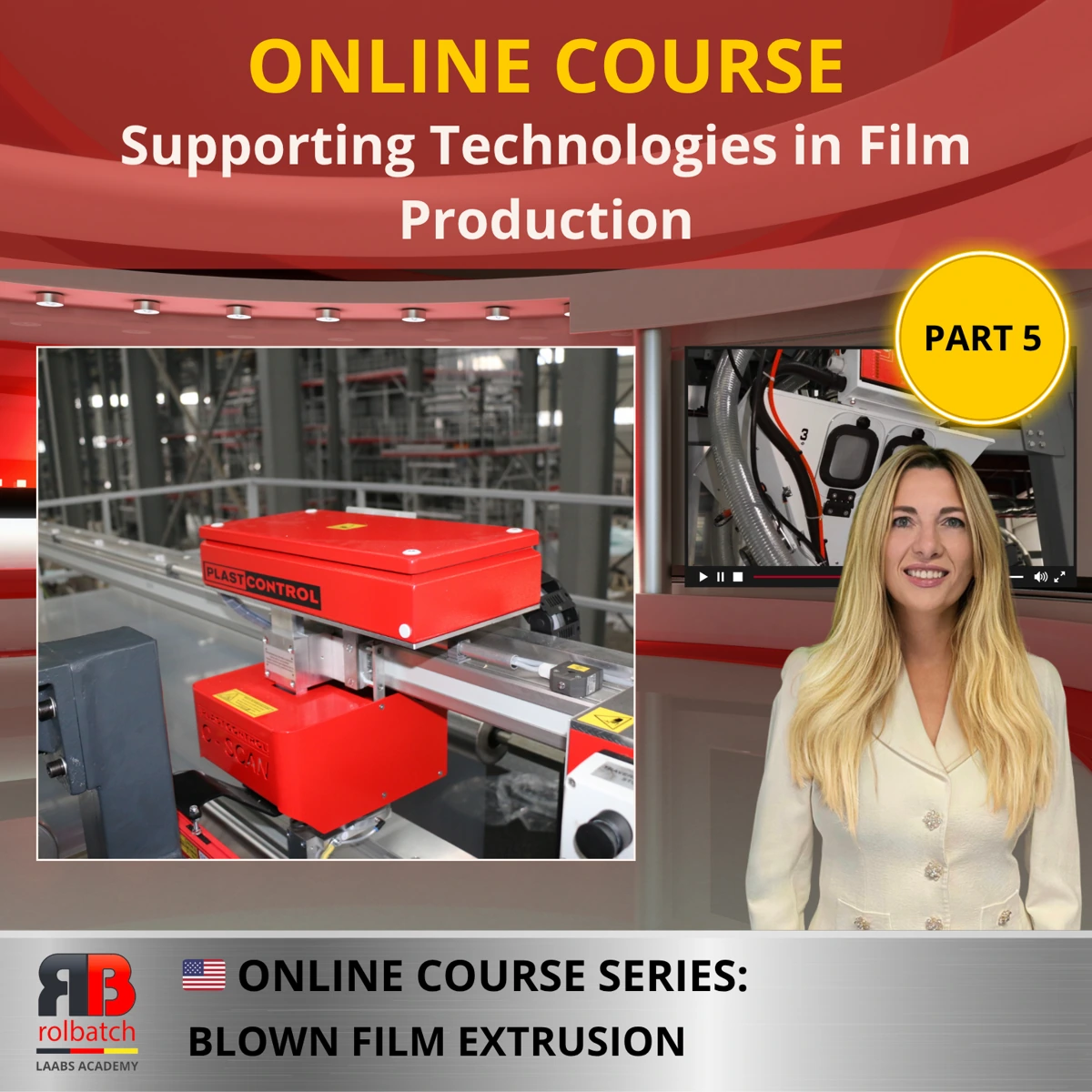
Gravimetric dosing, thickness measurement, internal bubble cooling (IBC), melt filtration, corona treatment and automation. The role of auxiliary equipment in achieving consistent quality.
You can add other courses, Executive and books to one enquiry.
Detailed programme description
Expand the full course descriptionCollapse the full description
Technologies supporting film production
The course covers equipment and systems that support process operation: dosing, thickness measurement, profile control, IBC cooling and melt filtration. It explains their functions and limitations.
Participants learn the relationships between system readings and actual process conditions. The material helps assess whether equipment is operating correctly, needs calibration or servicing, or is compensating for another problem on the line.
Skills developed in the course
- Understand gravimetric versus volumetric dosing and how dosing errors cause process instability that looks like a machine problem
- Assess blend homogeneity: why the blend in the hopper does not always match the blend in the melt
- Correctly interpret online thickness measurement: what the system actually measures, what it does not detect and where its practical limitations lie
- Recognise when automatic profile control improves thickness distribution and when it masks an actual die or cooling problem
- Understand how the air ring and IBC cooling affect film bubble stability, frost line position and film properties, and when IBC introduces instability instead of eliminating it
- Make informed decisions about screen changers and melt filtration: screen selection, replacement frequency and their impact on pressure stability and film quality
- Know when system cleaning (screw, barrel and die) is necessary, and how to avoid material degradation caused by improper cleaning
Who is this course for?
- Machine operatorswho work with these technologies every day but do not always know when a system supports the process and when it creates a new problem
- Production engineers and process engineerswho need to assess whether a supporting technology actually improves output or simply adds complexity
- Maintenance teams responsible for screen changers, cleaning schedules and system calibration
- Quality specialistswho need to understand the limitations of measurement and profile control systems
- Production managers and plant directors assessing technology investments: this course helps distinguish solutions that pay for themselves from those that deliver no benefit
Detailed topic coverage
Gravimetric and volumetric dosing systems How each type works, what affects dosing accuracy, and how dosing errors propagate through the process unnoticed.
Dosing errors and their impact on the process How to recognise when dosing instability causes problems that resemble temperature, pressure or material issues.
Blend homogeneity: when the blend is not what it seems Why the ratio in the hopper does not always match the ratio in the melt, and how this affects film properties and process repeatability.
Online thickness measurement systems What these systems actually measure, how sensor position and calibration affect results, and where the practical limits of measurement lie.
Automatic profile control When the system actually improves thickness distribution and when it compensates for a die or cooling problem that should be addressed at its source.
Air ring cooling and film bubble stability How air ring design and settings affect the frost line, film bubble shape and film quality, and how to optimise cooling without destabilising the process.
IBC: internal bubble cooling When IBC increases output and stability, and when it causes oscillations, pressure fluctuations or uneven cooling that creates problems downstream.
Screen changers and melt filtration How different types of screen changers work, how screen selection affects pressure and quality, and how to manage filter changes without interrupting the process.
Screen selection in practice How to select the right mesh for the material, film thickness and process conditions, and how filter management affects production continuity.
Cleaning the plasticising system (screw, barrel and die) When cleaning is necessary, how to recognise signs of contamination, and how to avoid degradation caused by improper cleaning.
Purging compounds: when they help and when they do not How to recognise when purging compounds solve the problem and when they merely mask the actual causes.
Course format
- Practical PDF materials covering each supporting technology: operating principle, impact on the process, and when it helps or masks problems
- Video and audio explanations for selected topics: dosing systems, thickness measurement and cooling dynamics
- Final quiz assessing the ability to evaluate technologies and make process decisions
A Rolbatch Academy certificate of participation and the opportunity to earn a diploma after a knowledge assessment. The requirements are explained in the FAQ.
This course directly continues Parts 1-4.
Learning arrangements and ordering
The course includes PDF materials and video and audio explanations of selected topics. Participants work at their own pace and can revisit the materials during the access period. Completion, certificate and diploma requirements are explained in the FAQ.
Please include the number of participants, language and preferred date in your enquiry. We will confirm availability, the access period and terms for your team. We accept orders by email. You can combine selected parts, Executive and books in one enquiry.
What does this part cover?
- Gravimetric dosing and repeatability in blend preparation.
- Film thickness measurement and control.
- Internal bubble cooling (IBC) and melt filtration.
- Corona treatment and process automation.
When should you choose this course?
Choose this part when you want to make better use of auxiliary equipment or prepare the team to discuss process control and automation.
How do you use the materials?
You learn online and revisit selected topics during the access period. You can choose the course on its own or combine it with other parts of the programme. In the offer, we will confirm the language, activation date, access period and terms for the selected number of participants.
Course knowledge should be applied with reference to the documentation, equipment and working rules of the specific plant.
Course language
Operator courses, Parts 1-9, are available in Polish, English, German and Spanish. The Executive programme is currently available in English only. We prepare other languages, including Italian and Russian, on request. For orders of at least 10 licences for the same course for 10 people, translation into an additional language is included at no extra charge. An additional translation charge applies to smaller groups. We will confirm the preparation timeframe in the offer.
Specify the language in your enquiry